This is not another list of famous places, and it is not a general essay about travel challenges. It is a piece of the product. You open a Quest, you get a board of places, you mark the ones you have already visited, you keep the missing ones in view, and if one of those gaps appeals to you, you turn it into a plan or an activity.
That is what it does. The rest of this guide is how to use it.
In Quests you pick a concrete challenge — the seven wonders, Spain among vineyards, the continents, the oceans — and you work with real objectives. Each objective has two clear states: you have already been or it is still missing. The Atlas feeds the first. Plan takes the second.
What Quests is, and what it is for
Quests sits between the map you already have and the trip you have not taken yet.
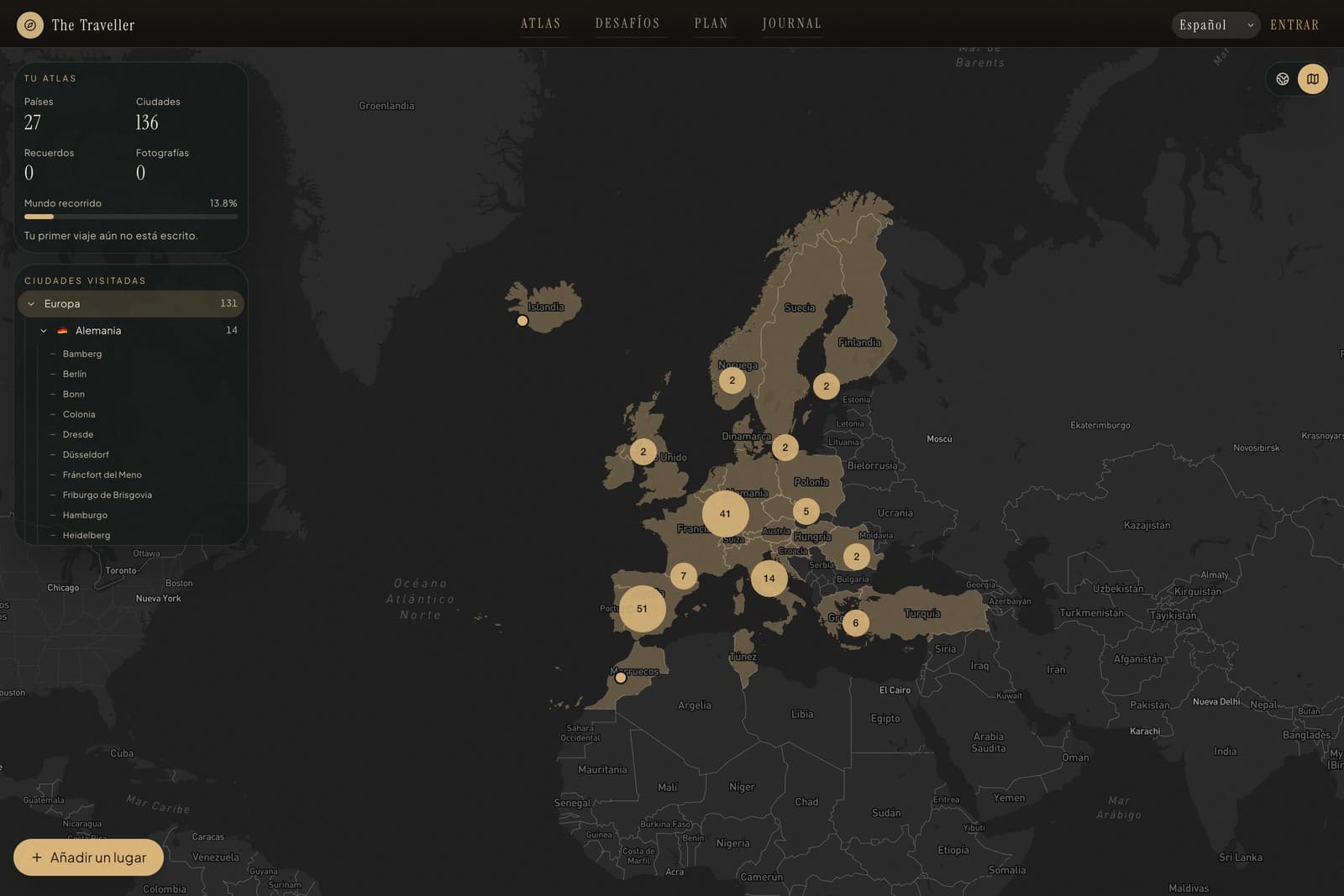
The Atlas stores cities, coasts and places. Plan holds dates and stops. Quests reads the first and pushes toward the second. It does not replace either of them. It gives them a shared board.
When you open a Quest you see, at a glance:
which places already count
which ones are still pending
what you can do right now with one of the missing ones
You do not have to reconstruct from memory whether you have been to Rome, Machu Picchu or a Rioja winery. If that trip is in the Atlas, the Quest recognises it. If it is not, you mark it yourself. If it is missing, it does not stay a grey pin: you can add it to an itinerary or ask for an activity built from that place.
The feature fits in one sentence: a board of places you can mark, review, and turn into the next trip.
The Quests you can open today
There are several, at different scales. You do not need to follow all of them. Open the one that gives you a useful list.
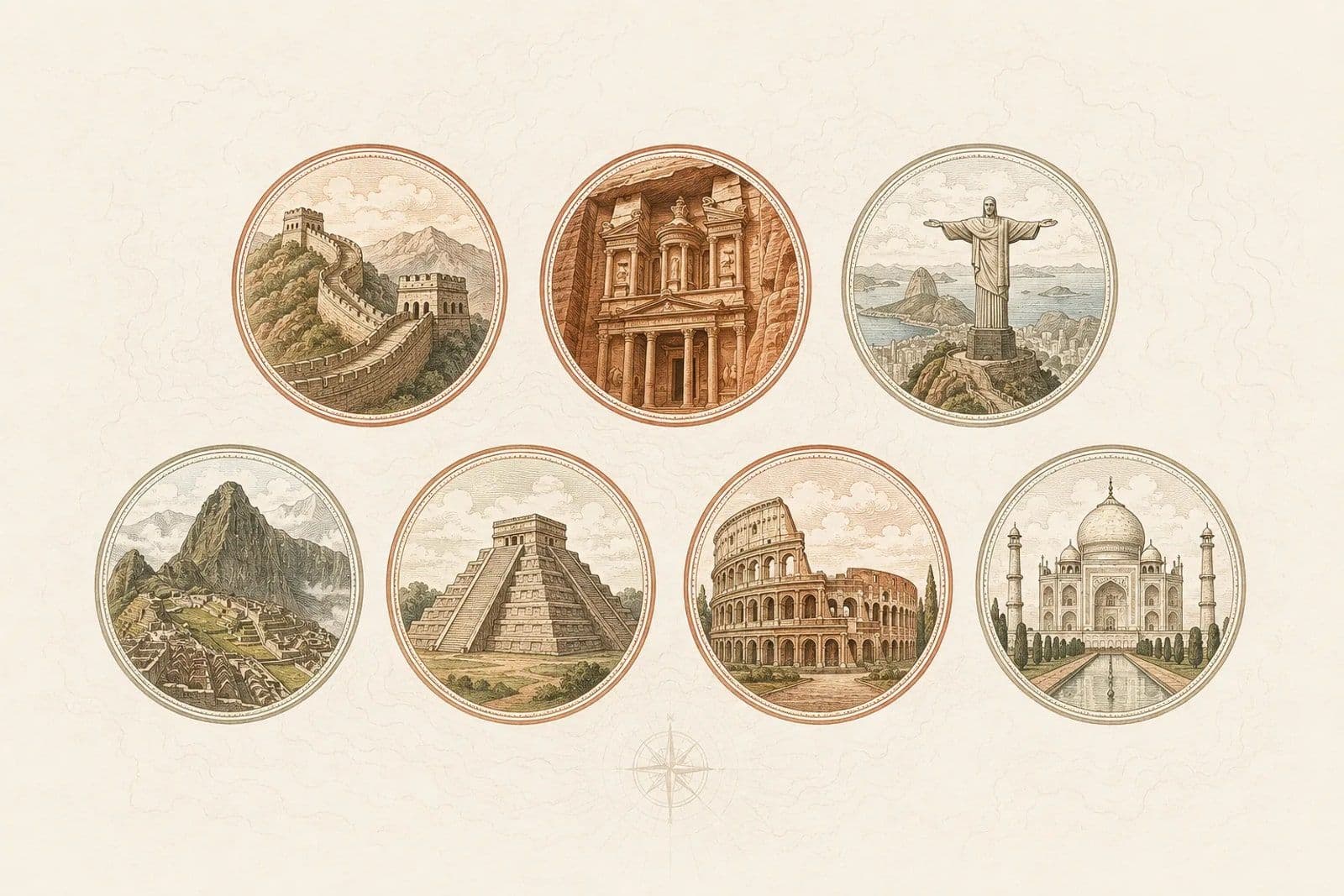
The seven wonders. The Colosseum, Petra, the Great Wall, Christ the Redeemer, Machu Picchu, Chichén Itzá and the Taj Mahal. Each one is a specific site, not a whole country. Flying to Italy does not complete the Colosseum. Standing at the monument does.
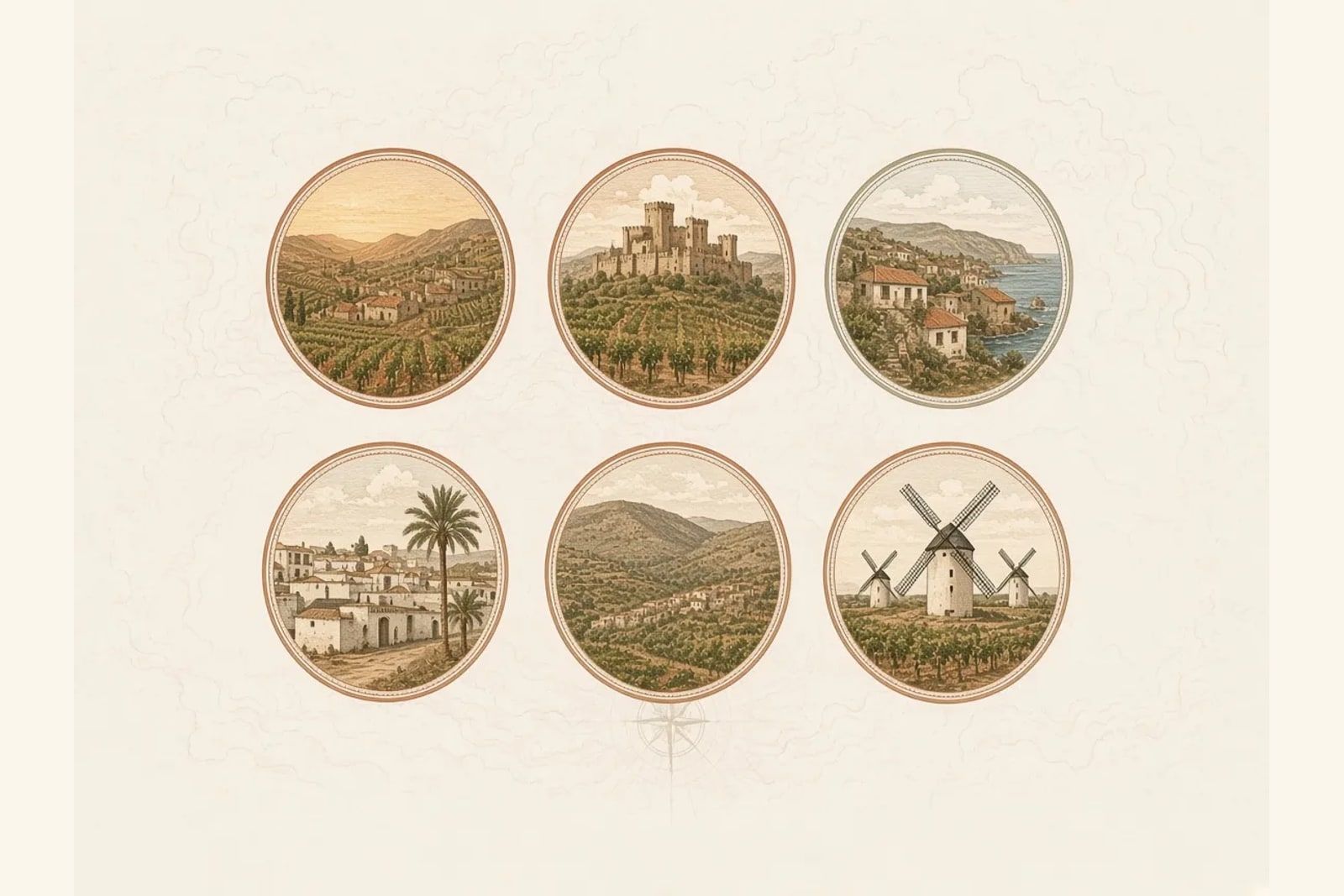
Spain among vineyards. Rioja, Ribera del Duero, Rías Baixas, the Sherry Triangle, Priorat, Penedès, Rueda, Ribeira Sacra and the other wine countries in the Quest. Sleeping in Haro or crossing Castile is not enough. Visiting a bodega in that region is.
The six continents and the five oceans. Broader. A continent leans on the cities you already have in the Atlas. An ocean is completed by a coast you have reached.
There are also Quests for provinces and for the countries of a continent, for when the map you care about is closer to home. Those boards split into visited and pending, and you can switch lists without losing the count.
Open one. Look at the progress. Decide whether that board gives you a trip idea. The rest can wait.
Mark the places you have already been
The first gesture in Quests is to mark a place.
If the site is already in your Atlas, you often do not have to do anything. A city visit near the Colosseum can complete that wonder. A recorded coast can complete an ocean. A province you have travelled advances the territorial Quest. The board reads the map you already keep.
If the site is not there, you mark it by hand.
On the wonders you can add it to the Atlas once you have visited it. The monument joins your map and the Quest counts it as done. On the vineyards the button is I have already been: it asks for the bodega name and stores it under that wine country. You can collect more than one bodega in the same region. The app does not have to know the cellar in advance; if search does not find it, you still add it.
That mark is not decoration. It changes the count — “3 of 7”, “6 of 15” — sets the place as completed and, when it exists, shows the date, the memory or the city that proves it. If you later want the recollection, the Quest takes you back to the Atlas. A marked place stays a place on your map, not a loose checkbox.
Marking is also a way to stay honest. An airport is not a wonder. A night in Logroño is not Rioja. If you are unsure, leave it pending. A board with clear gaps is worth more than an inflated one.
See which places are still missing
The other side of the board is just as useful.
Every Quest lists objectives as done or pending. The missing ones are not hidden. They appear muted, with the note that you have not discovered them yet, and with the concrete place — Rome, Cusco, La Rioja, the Atlantic coast — so you know what counts.
At the top you see the progress: how many you have, how many there are in total, the percentage. On territory or country Quests you can switch from the visited tab to the pending tab. On the wonders and the vineyards the list is the board itself: one look is enough to see the gap.
That is the practical part of the feature. Not “there are challenges”. There is a list you can keep marking, and another that tells you, without ceremony, what is still missing.
If two wonders are left, those two stop being a vague idea. If Rías Baixas and Ribeira Sacra are left, you already have a possible Galician weekend. If a continent is missing, you know which hole is in the Atlas. If a province is missing, it can be the excuse for a long weekend, not a trip around the world.
You can follow a Quest to keep it at hand, or open it only when you want to review the board. Progress is not lost. It also does not oblige you: a pending place is not homework. It is information.
From a missing place to a plan or an activity
Marking and seeing gaps does not help much if the next step stays in your head.
That is why, on every pending place, Quests offers two ways into Plan:
Add to a plan. The place enters an itinerary. You choose dates, fit the stops, and the Quest objective becomes a stage of the trip. A wonder can be the main reason. A wine country can be a single day between two cities.
Inspire an activity. Instead of starting the plan blank, you ask for ideas built from that place. A wonder prefills a cultural trip. A wine region prefills gastronomy and a departure town — Logroño, Aranda, Cambados, Jerez — for the weekend. The destination stops being a name on a list and becomes a proposal with dates.
That is the use we care about most: turning a gap in the Quest into a real plan.
One example with wonders. You have five. Petra and the Taj Mahal are left. You open Petra and, instead of leaving it as a distant pin, you add it to a plan or ask for an activity around Wadi Musa. Another with vineyards. You have marked Rioja and Ribera del Duero. Priorat is still missing. Inspiring an activity gives you a concrete reason for a long weekend, not just a pending name.
When the trip happens, the place returns to the Atlas. The Quest marks it done. The board updates. The loop is short on purpose: mark, see the gap, plan, come back.
If you later want to travel more slowly once you have the destination, slow travel belongs after that choice, not before. First you pick the place. Then you choose the pace.
How it leans on the Atlas — and when the Atlas is not enough
If you have been adding cities for years, several Quests will probably open already half complete. That is deliberate. We are not asking you to feed another list from scratch. The map you already have is the starting point.
There are exceptions on purpose. In Spain among vineyards, sleeping in the province does not count. The bodega does. That is why the mark is explicit and asks for a name. In the seven wonders, the monument is the objective, not the country. Being in Beijing does not complete the Great Wall if you have not been to the wall.
The rest — continents, oceans, provinces, countries — lean more on what is already on the map. The more honest the Atlas, the more faithful the board.
If you are just starting, you do not need to rebuild a whole life. Mark one Quest place you do remember and leave the rest pending. A board with clear gaps is more useful than an inflated one. Progress appears when the trip is recorded, not when you imagine it.
Start with one Quest
Open Quests. Pick the wonders or the vineyards, or whichever fits now.
Mark what you have already lived. Look at what is missing. If one of those places appeals to you, turn it into a plan or inspire an activity.
You do not have to complete the Quest. If one gap gives you the next trip, the feature is already doing its job.