Memories
How to keep a record of every country you have visited
Counting countries is a shortcut. The map you later want to open is made of cities, not boxes.
The Traveller Journal6 min read
In this article
A list of countries fits in a notebook and gives you a quick number. It serves the question at the table. It serves little when, years later, you want to know where you actually were.
A country is a border. A trip almost never is. You can have crossed a state in an airport and seen nothing, or gone back ten times to the same city and know it better than many places you "visited" once. A useful record tells those two apart.
Ways to keep the count
There is no correct method. There are methods that last and methods that get dropped on the third trip.
The list. One name under another. It is honest and short. It breaks when you want the year, the city or who you were with. At thirty lines, everything looks equally visited.
The spreadsheet. Columns for country, city, dates, a comment. It works if you like maintaining it. It fails if you only open it to add rows and never to read them. A table is not a map: it does not show you that two of your trips were an hour apart and you never knew.
The notebook. A page per trip, the cities written down and little else. It ages well. It is bad for counting, and finding "that city from the train" depends on you remembering the year.
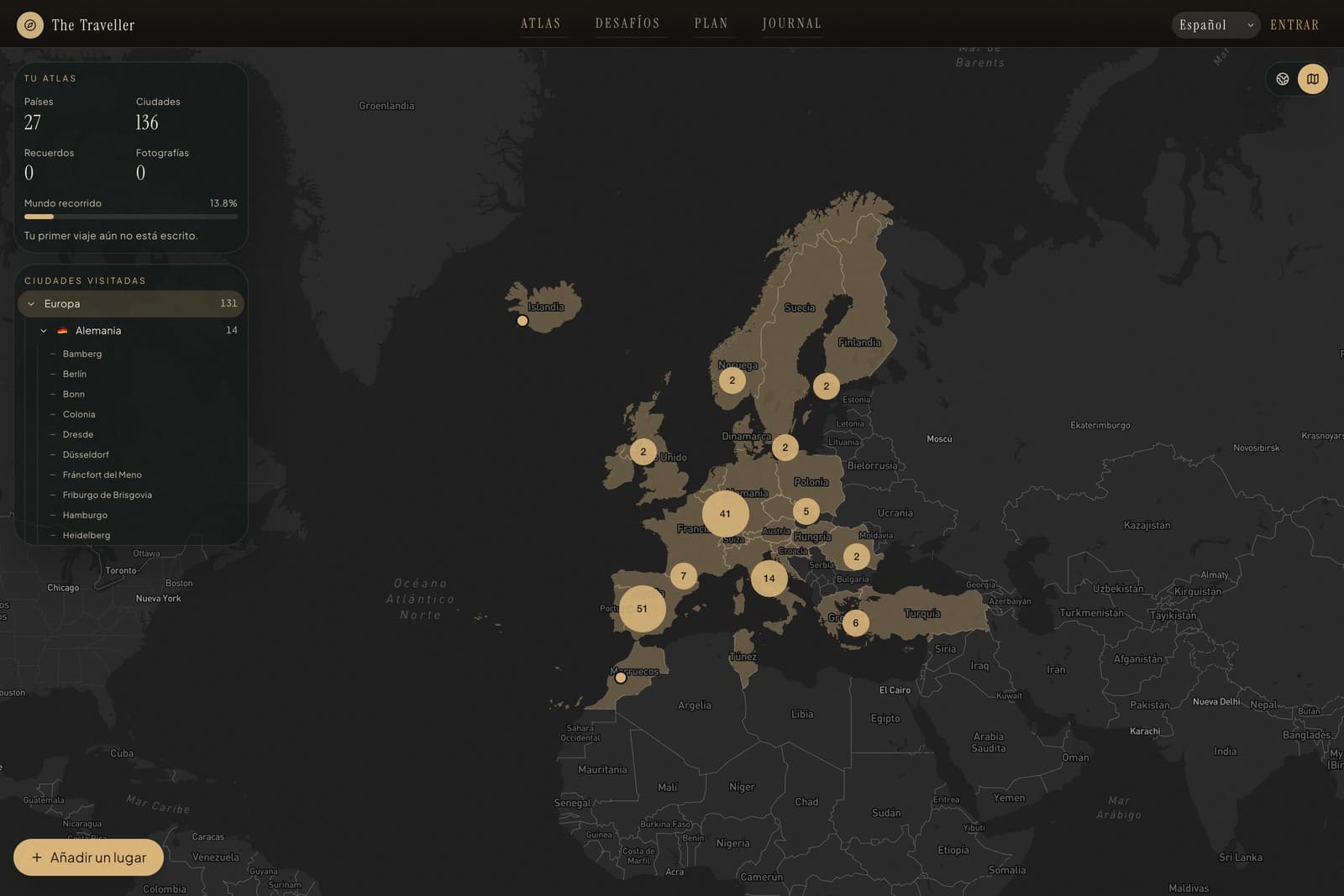
The map. Each place is a point, not a row. You see gaps, repeats and coastlines. It is the format closest to how a trip is remembered: not as a sum, but as a place you can go back to with a finger.
You can use more than one. Plenty of people keep a mental list of countries and, in some drawer, the tickets. The problem starts when neither of them says which city it was, or what happened there.
Why the city matters more
The country lights up by itself. The city has to be chosen.
"I have been to Italy" can be Rome on a long weekend, or a whole summer in a village. Both sentences use the same country and they are not the same trip. If the record only keeps the country, in a few years you will not be able to separate them.
Note, at a minimum:
- The city or village where you slept
- The year, even if you do not have the day
- Whether it was a layover, a visit or a place you went back to
- One line on why you remember it, if you do
A layover deserves its own mark. If you do not distinguish it, the map fills with airports and looks like a more travelled life than it was. There is nothing wrong with a layover. There is something confusing about counting it as if you had lived the place.
Regions and territories tell a story the country hides. Knowing three provinces and never leaving the capital are two different maps. If your trip was along a coast, a mountain range, or a small country crossed from end to end, the country is the label. The territory is the memory.
How to start without sorting everything
Do not rebuild a life in a weekend. Start with the last trip. Then the one before. When you doubt a city from fifteen years ago, leave it out or mark it as unsure. A map with honest gaps is worth more than an inflated one.
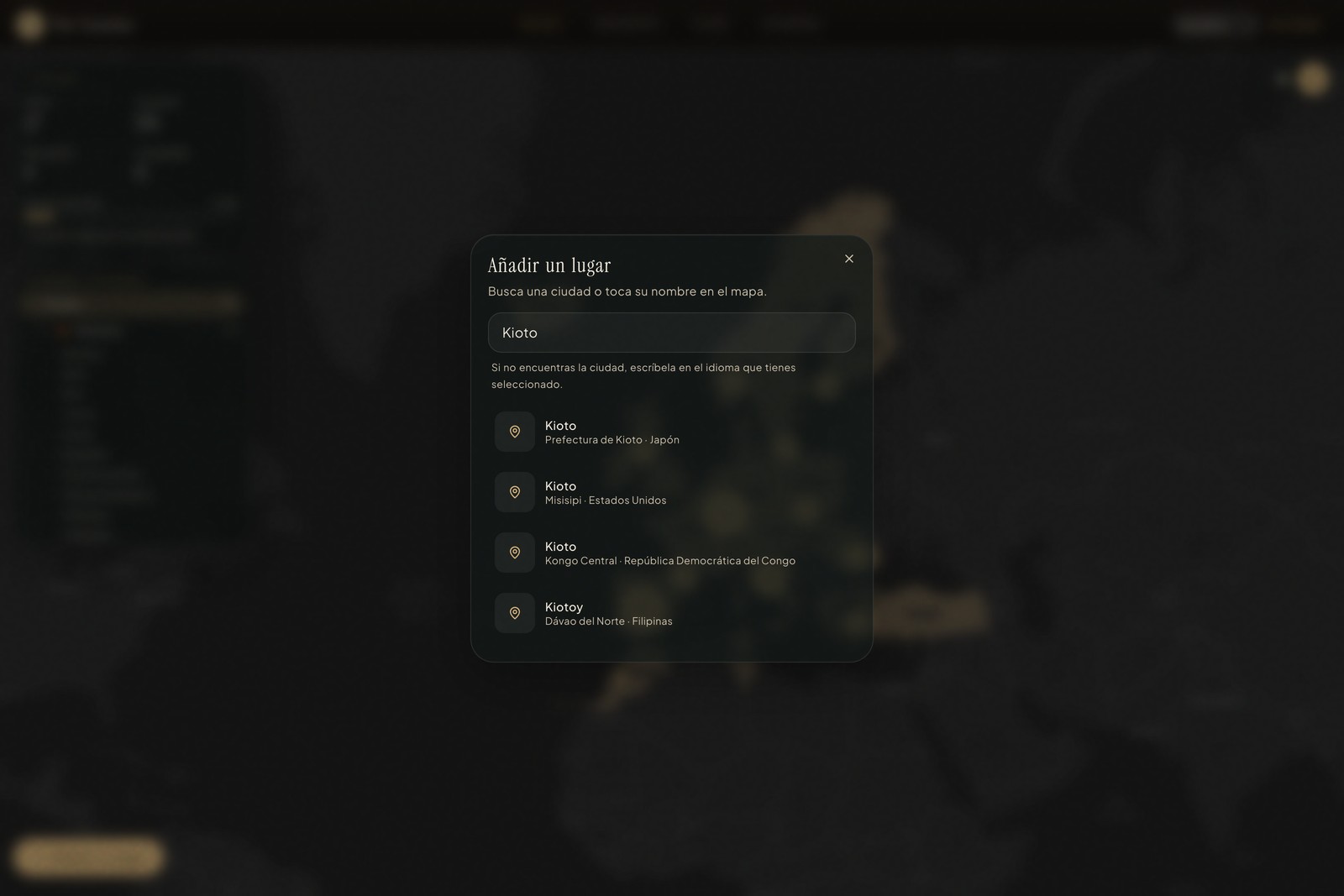
For each trip, write the cities before the country. The country comes afterwards, as a consequence. If you can rescue only one fact, rescue where you slept.
Photos help, with a limit. A camera roll sorts by date, not by place, and many pictures no longer store where they were taken. The method for choosing, discarding and grouping is in how to organise photos. You do not need to dump thousands of files to light a point on the map.
If you also want a sentence, a voice or the name of a specific spot, that is already a journal. How to keep a digital travel journal is about what is worth noting, and how not to turn it into a duty.
What belongs on a map, and what does not
A good personal record answers three questions, not one:
- Where have I been, down to a city?
- Which trips were passing through, and which were mine?
- What do I want to be able to open in ten years without depending on memory?
A count of countries answers none of them fully. It can sit beside them. It should not replace them.
You also do not have to publish the map. There are trips you do not want to show, and places you would rather not mark. A private record is still a record. Showing it is a separate decision, not the reason to start.
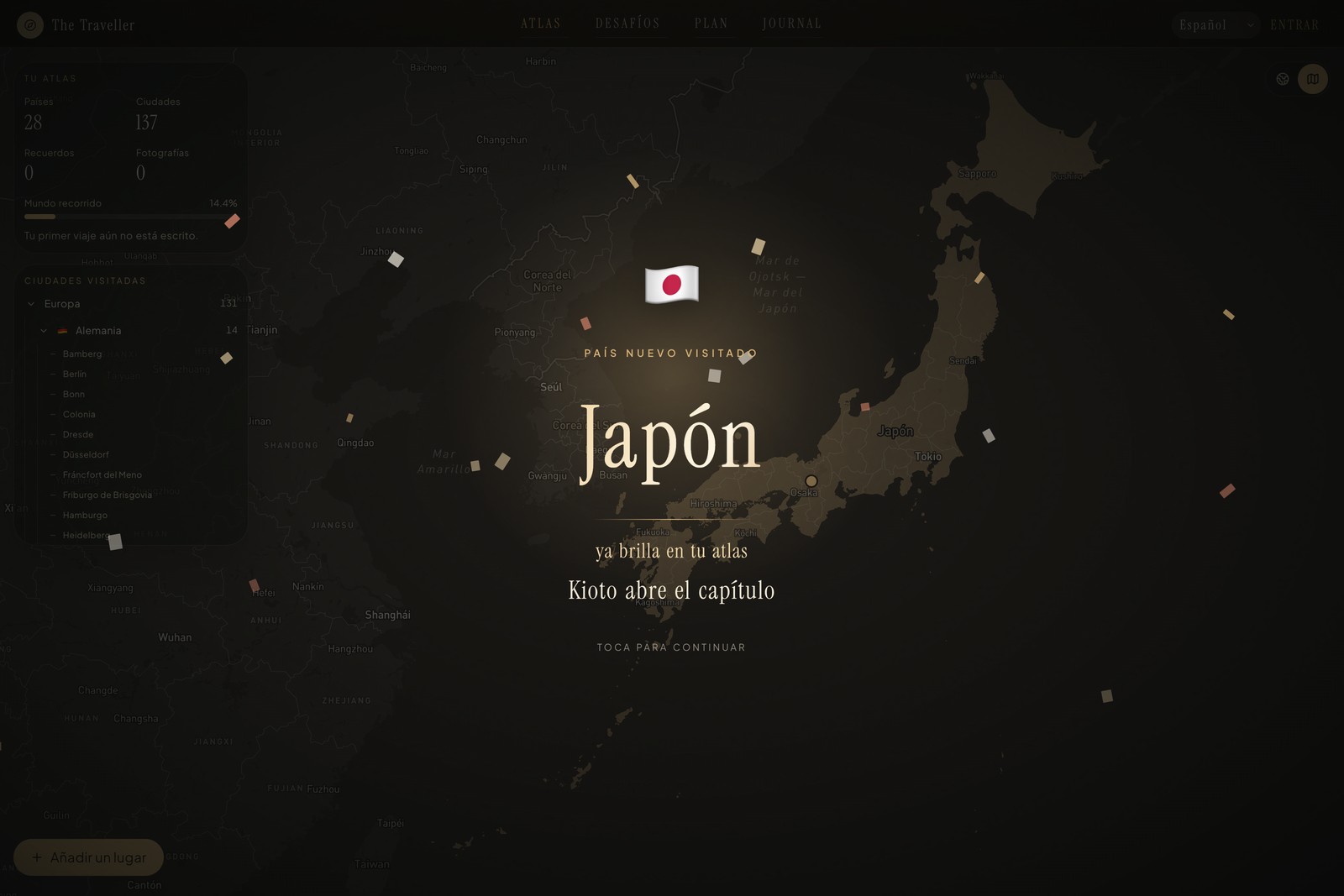
The point on the map can stay on its own. Or you can leave a photo, a note, a voice or a song beside it. Then the pin stops being a statistic.
In Quests, continents, countries and the territories of a country you visit move forward with those same cities. They are not ticked by hand. If you care more about territory than a sum of flags, that is the record that grows with you, not a list you have to update.
The point is not to colour in every country. The point is not to forget the ones that changed you, and to know them from the ones you only crossed.
When the map has a few cities from the same trip, you already have the skeleton of a story. How to turn those memories into a book — the book you can open today, not a printed one — starts exactly there: with what you decide to keep and what you decide not to inflate.
Keep travelling

Memories
How to keep a digital travel journal
A travel journal works when it keeps little, keeps it in time, and keeps it where it happened.

Memories
How to organise photos from all your trips
A camera roll sorts by the hour. A trip is found again by city, and by the few photos that still say something.

Memories
How to turn the memories of a trip into a book
A travel book is not an album with captions. It is what remains when you have taken almost everything out.